This has become one of my favorite oils: my special guy friend says it hypnotizes him when I wear it (I apply a little on sinus areas on my face... it seems to be good for my sinuses, as well as help me when my brain feels foggy. (I have adrenal fatigue syndrome)
Art by:Dolf Cheng
To order visit https://www.youngliving.org/tracisayhi
or message me at my Joyful Scents Facebook page to find out how you can become a wholesale member
saving 24% and how you can get a FREE HOME DIFFUSER (retail Value
$98.68) No obligations to buy or sell, orders are shipped directly to
you. Ask me how!
Lavender, and Peace & Calming, come in the Start Living with
Everyday Oils Collection (Premiums Starter Kit) along with 7
(Frankincense, Thieves, Valor, Lemon, Peppermint, Purification, and
PanAway) and other therapeutic grade essential oils, and a HOME DIFFUSER
and MORE for $150 US a retail value of over $330!!!
Showing posts with label Health. Show all posts
Tuesday, October 15, 2013
For all 'Young Living' Oilers... I cleared my sinuses with the Raindrop oils...
This is getting rid of my sinus headache. It's not conventional, but I'm applying the Raindrop oils to the sinus areas on my face.... am adding a one to one ratio of v-6 oil with the hotter oils... for most people, I would recommend a 5 to one ratio. This is clearing my sinuses! :)
p.s. Top it off with some eucalyptus blue.
To order visit https://www.youngliving.org/tracisayhi or message me at my Joyful Scents Facebook page to find out how you can become a wholesale member saving 24% and how you can get a FREE HOME DIFFUSER (retail Value $98.68) No obligations to buy or sell, orders are shipped directly to you. Ask me how! Lavender, and Peace & Calming, come in the Start Living with Everyday Oils Collection (Premiums Starter Kit) along with 7 (Frankincense, Thieves, Valor, Lemon, Peppermint, Purification, and PanAway) and other therapeutic grade essential oils, and a HOME DIFFUSER and MORE for $150 US a retail value of over $330!!!
p.s. Top it off with some eucalyptus blue.
To order visit https://www.youngliving.org/tracisayhi or message me at my Joyful Scents Facebook page to find out how you can become a wholesale member saving 24% and how you can get a FREE HOME DIFFUSER (retail Value $98.68) No obligations to buy or sell, orders are shipped directly to you. Ask me how! Lavender, and Peace & Calming, come in the Start Living with Everyday Oils Collection (Premiums Starter Kit) along with 7 (Frankincense, Thieves, Valor, Lemon, Peppermint, Purification, and PanAway) and other therapeutic grade essential oils, and a HOME DIFFUSER and MORE for $150 US a retail value of over $330!!!
Friday, October 4, 2013
This Woman is Doing an Amazing Give-away!
October GiveAway at Oils Today!
One person will win a set of 7 5ml bottles of Young Living Essential Oil Blends, including: DiGize, Endoflex, Juvaflex, Melrose, Raven, RC, and Thieves. Go ahead and check out the link to the post on her Facebook, here is the graphic you should see. Just follow the instructions. :)
October GiveAway!
Share and like this post. *Must change settings so I can see the share to win.
Facebook rules apply and I will be doing future posts to cover each of the 7 oil blends in this kit, individually!
#Fall in with a Best Winter #GiveAway!
MnSue ing what I do, welcome to learn and share from my page!
One person will win a set of 7 5ml bottles of Young Living Essential Oil Blends, including: DiGize, Endoflex, Juvaflex, Melrose, Raven, RC, and Thieves. Go ahead and check out the link to the post on her Facebook, here is the graphic you should see. Just follow the instructions. :)
October GiveAway!
Share and like this post. *Must change settings so I can see the share to win.
Facebook rules apply and I will be doing future posts to cover each of the 7 oil blends in this kit, individually!
#Fall in with a Best Winter #GiveAway!
MnSue ing what I do, welcome to learn and share from my page!
Thursday, October 3, 2013
I Made This Essential Oil Review of DiGize Oil by Young Living
I made this review of a Young Living essential oil blend called Digize. It's a little awkward but I hope people will find it informative:
Wednesday, October 2, 2013
Did You Knoow That the Leaves and the Bark of Apple Trees Are Edible and Medicinal?
... neither did I.... I haven't tried these, yet, but my special guy friend is a green thumb... he actually planted some apple seeds, and some little plants are sprouting.... and it made me think of a bible verse I heard about the leaves of edible trees being given by God for our medicine:
So,I did a search on edibility and medicinal use of apple leaves, and found this:
Article by Jim Mcdonald: herbalist
Apple
various Malus spp.
Is it really worth describing the apple
tree? Real quick, they're not too big... 8 to 20 feet
would be average. You might find some up to 50 feet,
but that'd be an exception. In spring they're all
a-blossom, ranging in colors from white and pink to
purplish red. The leaves are generally oval, and
darker green on top than underneath. Apple wood is
reasonably hard, and used to be used in making handles for
tools. The trees often have an abundance of dead
lower limbs still attached, and these make great kindling
and fire wood, as they stay dry up off the ground and
break off pretty easily. The fruits... you
know what the fruits look like... Though there are almost
infinite varieties of apples, for our purposes, we needn't
distinguish. Rather, a taste will reveal the degree
of potency.
The leaves and bark of the apple tree possess astringent properties that make it useful in a number of conditions. The inner bark has been used as a folk medicine to treat hyperacidity and heartburn. Herbalist Tommie Bass tells us, "Make a tea or syrup from the bark (or leaves in the summer) for a sour stomach or if the stomach burns. It settles your stomach". Apple bark is an ideal remedy in treating this malady, as it not only acts as an antacid, but its astringency also restores strength and tone to the sphincter that separates the harsh stomach acids from the esophagus, thereby acting in a curative, as well as palliative, manner. A tea will likewise be of benefit during bouts of diarrhea, or to address chronic loose stools. It is anti-inflammatory, and its mild bitterness will also promote more efficient digestion.
Herbalist David Winston told me about a
rather obscure use of apple bark: "One of my early
teachers, the late William Le Sassier used (and I use)
Apple tree bark as a lymphatic and Spleen tonic. It
enhances lymphatic circulation, helps to shrink an
enlarged spleen. It is usually mixed with other
Lymph/Spleen herbs. It is specifically indicated for
splenic congestion, with a slightly enlarged spleen,
tender to the touch, with diarrhea. Gather the bark spring
or autumn." The only other reference I've seen for
Apple being use for the spleen is from colonial herbalists
John Sauer, who wrote, "Cider pressed from very ripe sweet
apples and freshly fermented may be boiled to a syrup with
loaf sugar. When several spoonfuls of this are taken
at a time, the syrup is quite useful against splenetic
disorders, for strengthening the heart, and for dispelling
faintings or palpitations, as well as melancholies caused
by grief and hard times."
Apple Bark used to be used in treating fever as well, though it's not on my list of things I'd start with... mainly because, at the moment, I really don't get its mode of action. Nonetheless, Felter and Lloyd share the following, (which is useful to know, since apples are likely more common in the homes of fever-stricken friends and family than yarrow and elder blossoms): "An apple tea may be made for fever patients, by boiling a tart apple in 1/2 pint of water, and sweetening with sugar."
Apple leaves may be used similarly to
the bark, though they are milder in action. They
make an excellent topical application, and may be chewed
and applied as a poultice to inflamed swellings, boils or
infected bites, which they relieve by virtue of both their
astringent and antiseptic qualities. These would be
excellent first aid applications for bug bites and thorn
scratches, and the other common maladies that can occur
during a good days hike. Apple leaves could be put
into a mason jar with water and left out in the sun for a
while to make a gentle astringent toner for the skin,
similar to Witch Hazel extract. A weak tea can be
swished in the mouth to tone weak and easily bleeding
gums.
Apple cider, produced prolifically throughout the Great Lakes bioregion, also yields medicinal merit (and few things taste better). Grieve's Modern Herbal says, "It is stated on medical authority that in countries where unsweetened cider is used as a common beverage, stone or calculus is unknown, and a series of inquiries made of doctors in Normandy, where cider is the principal drink, brought to light the fact that not a single case of stone had been met with during forty years." I find this likely to be an exaggeration, though probably not without some truth beneath it. Felter and Lloyd share that "A strong decoction or syrup of the sweet apple tree bark has been employed with success in some cases of gravel". Cider is also decidedly diuretic, as anyone who's too greedily hoarded a jug of fresh Cider well knows.
Cider is also a tasty medium for infusing herbs. King's American Dispensatory makes reference to infusing parsley or horseradish in cider to treat dropsy. I've steeped Chamomile in hot Cider (referring to this drink alternately as "Applemile" and "Cham-apple" cider), and find it an excellent calming beverage to take the "anti-nap fight" out of overtired children... for overtired adults, steep the Chamomile in some hard Cider (or add a squirt or two of the tincture) for a little extra "kick".
And, as referred to in that ever-popular rhyme, even apples themselves offer remedial benefits. Tommie Bass tells us, "apples good for constipation, dry apples good for diarrhea." John King wrote that "Cooked apples form an excellent local application in ophthalmic inflammation, …inflammations, sore and swelled throat…, ulcers, etc." Maude Grieve shares "Ripe, juicy apples eaten at bedtime every night will cure some of the worst forms of constipation. Sour apples are the best for this purpose." John Sauer offers a couple recipes for Apple poultices: "Apples that have turned mealy, pared and with the seeds and cores removed, may be browned in fresh, drawn butter. After they are browned, lay them between a double folded cloth and place this on sores of the breast. This reduces the swelling or else causes the sores to head up and break. Once they have opened, daub them with a little honey, which will cleanse them and cause them to heal up quickly". Another, which he suggests for pleurisy and also backache, cooks past-their-prime apples in an infused oil of chamomile with a bit of saffron, applied is hot to the chest or back... does that not sound exquisite?
It must be stated that Apple leaves, bark and seeds all contain hydrocyanic acid - "cyanide" - and that this means some sensible, informed caution needs to be exerted in using preparations of Apple. Hydrocyanic acid is widespread in the plant kingdom, found in peaches, almonds, apricots and many other fruit trees. It is itself partially responsible for the medicinal virtues of herbs that contain it. In herbal medicine, Wild Cherry Bark, which contains hydrocyanic acid, is a popular and admirably safe remedy by which the use of apple may be put into perspective. Apple probably existed in early herbal medicine as a substitute or alternative to Cherry Bark. I've used a tincture of fresh Peach leaves and twigs for years, as much because it tastes so good as that it's good for me. The hydrocyanic acid is most concentrated in the seeds, and these should not be used, though they're commonly consumed by "juicers".
Personally, I don't feel that Apple preparations are dangerous, but be sensible and make them with a light hand... after all, taking responsibility for your health means you also have to take responsibility for learning about the things you use to sustain it. King's American Dispensatory states, "Apple tree bark (tea) may be given in doses of 1 to 4 fluid ounces, 3 times a day." Small doses of the tincture, from 5-1O drops, would be preferable to larger doses, and this much would likely be sufficient to handle run of the mill heartburn (Apple's cousin Peach is also very good for this). Despite my opinions about its safety, it makes sense to be informed about the symptoms of hydrocyanic acid poisoning: anxiety, confusion, dizziness, headache and vomiting are initial indicators, and warrant a call to your local poison control center.
Because its far too nebulous a topic, and I don't know a lick about it, I'm not going to cover apple cider vinegar, with the exception of an interesting formula by Tommie Bass for Poison Ivy: 2 cups oak bark (apple bark would probably do, too), 1 quart apple cider vinegar, & 1 quart water. Slow boil for 25 minutes, strain and apply liberally.
Apple cider, produced prolifically throughout the Great Lakes bioregion, also yields medicinal merit (and few things taste better). Grieve's Modern Herbal says, "It is stated on medical authority that in countries where unsweetened cider is used as a common beverage, stone or calculus is unknown, and a series of inquiries made of doctors in Normandy, where cider is the principal drink, brought to light the fact that not a single case of stone had been met with during forty years." I find this likely to be an exaggeration, though probably not without some truth beneath it. Felter and Lloyd share that "A strong decoction or syrup of the sweet apple tree bark has been employed with success in some cases of gravel". Cider is also decidedly diuretic, as anyone who's too greedily hoarded a jug of fresh Cider well knows.
Cider is also a tasty medium for infusing herbs. King's American Dispensatory makes reference to infusing parsley or horseradish in cider to treat dropsy. I've steeped Chamomile in hot Cider (referring to this drink alternately as "Applemile" and "Cham-apple" cider), and find it an excellent calming beverage to take the "anti-nap fight" out of overtired children... for overtired adults, steep the Chamomile in some hard Cider (or add a squirt or two of the tincture) for a little extra "kick".
And, as referred to in that ever-popular rhyme, even apples themselves offer remedial benefits. Tommie Bass tells us, "apples good for constipation, dry apples good for diarrhea." John King wrote that "Cooked apples form an excellent local application in ophthalmic inflammation, …inflammations, sore and swelled throat…, ulcers, etc." Maude Grieve shares "Ripe, juicy apples eaten at bedtime every night will cure some of the worst forms of constipation. Sour apples are the best for this purpose." John Sauer offers a couple recipes for Apple poultices: "Apples that have turned mealy, pared and with the seeds and cores removed, may be browned in fresh, drawn butter. After they are browned, lay them between a double folded cloth and place this on sores of the breast. This reduces the swelling or else causes the sores to head up and break. Once they have opened, daub them with a little honey, which will cleanse them and cause them to heal up quickly". Another, which he suggests for pleurisy and also backache, cooks past-their-prime apples in an infused oil of chamomile with a bit of saffron, applied is hot to the chest or back... does that not sound exquisite?
It must be stated that Apple leaves, bark and seeds all contain hydrocyanic acid - "cyanide" - and that this means some sensible, informed caution needs to be exerted in using preparations of Apple. Hydrocyanic acid is widespread in the plant kingdom, found in peaches, almonds, apricots and many other fruit trees. It is itself partially responsible for the medicinal virtues of herbs that contain it. In herbal medicine, Wild Cherry Bark, which contains hydrocyanic acid, is a popular and admirably safe remedy by which the use of apple may be put into perspective. Apple probably existed in early herbal medicine as a substitute or alternative to Cherry Bark. I've used a tincture of fresh Peach leaves and twigs for years, as much because it tastes so good as that it's good for me. The hydrocyanic acid is most concentrated in the seeds, and these should not be used, though they're commonly consumed by "juicers".
Personally, I don't feel that Apple preparations are dangerous, but be sensible and make them with a light hand... after all, taking responsibility for your health means you also have to take responsibility for learning about the things you use to sustain it. King's American Dispensatory states, "Apple tree bark (tea) may be given in doses of 1 to 4 fluid ounces, 3 times a day." Small doses of the tincture, from 5-1O drops, would be preferable to larger doses, and this much would likely be sufficient to handle run of the mill heartburn (Apple's cousin Peach is also very good for this). Despite my opinions about its safety, it makes sense to be informed about the symptoms of hydrocyanic acid poisoning: anxiety, confusion, dizziness, headache and vomiting are initial indicators, and warrant a call to your local poison control center.
Because its far too nebulous a topic, and I don't know a lick about it, I'm not going to cover apple cider vinegar, with the exception of an interesting formula by Tommie Bass for Poison Ivy: 2 cups oak bark (apple bark would probably do, too), 1 quart apple cider vinegar, & 1 quart water. Slow boil for 25 minutes, strain and apply liberally.
I've made a nice kinnickkinnick
(smoking mixture) from a blend of Tobacco, Apple leaves
and bark, and Chamomile... mmm.
Tuesday, September 17, 2013
The Flu Vaccine–What Your Doctor Won’t Tell You (Or Probably Doesn’t Even Know)
Article Via:VaxTruth
Megan Pond

First, I would like to direct you to two articles: Vaccine Ingredients – A Comprehensive Guide and Is There Thimerosal in the Flu Vaccine? If you click on the first link, you can scroll down to the section that explains a little more about thimerosal and mercury in vaccines. Here’s a quick summary of the articles’ findings.
According to the CDC, vaccines labeled “thimerosal-free” often have a little asterisk next to those words which lead you to something like: “This vaccine has ‘trace’ amounts of thimerosal, which the FDA says is equivalent to thimerosal-free products.” If we look closer into “thimerosal-free” vaccines, we will actually find that there is still a toxic amount of mercury contained in them.
There are two kinds of flu shots given. One contains 25 mcg of mercury (in the form of thimerosal with is 50% mercury. There is 50mcg of thimerosal in this flu shot) and is often given as the “regular” flu shot to those with no special circumstances. The other kind of flu shot is labeled “thimerasol-free” (containing less than 3mcg of mercury) and is given to young children and pregnant women.
If we look at “safe” and “un-safe” levels of mercury, per the FDA, we find this:
2 ppb is the maximum amount of mercury that deems water “safe” for drinking
Anything over 200 ppb mercury is considered TOXIC [source - EPA]
After doing some math [you can check my math in the article: Vaccine Ingredients – A Comprehensive Guide], we find this:
There is up to 300 ppb mercury is in the “thimerosal-free” flu vaccine.
There is 25,000 ppb mercury given in the flu shot containing 25 mcg of thimerosal as a preservative.
No matter how you cut it, flu vaccines contain toxic amounts of mercury. So yes, the flu vaccines still DOES contain thimerosal. The claim that there is “no thimerasol” in the flu vaccine is a complete fallacy, which leads to the next myth.
There have never been any real studies done on pregnant women and the effects of eating fish-contained mercury. What information has been gathered is mainly based on trial and error. Some doctors urge their pregnant patients to completely steer clear of fish altogether because of the mercury content, while others advise pregnant women to eat “low mercury fish” once or twice a week. According to the 2010 Dietary Guidelines for Americans, eating 8-12 ounces of low mercury fish per week is safe for pregnant women. The FDA (Federal Drug Administration) and EPA (Environmental Protection Agency) say up 12 ounces per week is safe. The Mayo Clinic says to limit albacore tuna, chunk white tuna and tuna steak to 6 ounces per week. [source Mayo Clinic]
So then we have to ask: What is considered low mercury fish?
According to the FDA: shrimp, crab, salmon, pollock, catfish, cod, tuna, and, tilapia are considered low mercury fish. Tuna contains the highest amount of mercury in the low mercury fish category. [source FDA.gov]
Which leads us to: How much mercury is in fish?
Using tuna as an example, which contains the highest amount of mercury in the low mercury fish category, we find out it contains approximately 128 ppb mercury. All of the other low mercury fish are lower than that. The fish containing the highest amount of mercury, tilefish, has 1,450 ppb mercury — very understandable that pregnant women and children are urged to not eat high mercury fish. [source FDA.gov]
Now we’ll look at how many micrograms of mercury is in a serving of fish, again using tuna as an example. Three oz. of tuna is considered 1 serving, so that means a pregnant woman can safely eat 1 serving of tuna 4 times a week, according to the Dietary Guidelines for Americans. If we look at the current amount of mercury in fish (because it changes from year to year), we see that there are approximately 13.32mcg of mercury in 12 ounces of tuna, which equates to 3.33mcg per serving. The amount of mercury in tuna sits between 12-14mcg per 12 ounces every year, and has never been recorded as going over 14mcg. [source EPA]
Therefore, we can safely come to the conclusion that the FDA standard for mercury consumption in pregnant women is a maximum of 14mcg in one week, not the 25mcg that floats around on message boards. Consuming 25mcg of mercury in fish would almost double the amount the FDA considers safe for pregnant women.
I would also like to point out that *INGESTING* mercury is very different than *INJECTING* it straight into your muscle or blood stream. Ingesting small amounts of mercury is considered safe because it goes through a number of natural filtration systems in our body before it reaches the blood stream. Studies suggest that eating higher amounts of mercury (anything over 200ppb) can be toxic because a small amount of mercury is able to reach the blood stream and can cause neurological disorders, immune disorders, and other significant problems. A very in-depth study done by the University of Calgary showed that even small amounts of mercury reaching the brain cannot only halt neuron growth, but it actually causes the neuron growth to *reverse*. Neurons are integral cell bodies and nerve processes in our brains. Unlike other body cells, neurons stop reproducing shortly after birth. Because of this, some parts of the brain have more neurons at birth than later in life because neurons die and cannot be replaced. [source University of Calgary] [source]
By injecting mercury instead of ingesting it, you are essentially by-passing your inner filtration systems. All of the mercury in a vaccine enters the blood stream, which leads straight to the brain. Remember that toxic amounts of mercury is considered anything over 200ppb, and the amount of mercury in a “thimerosal-free” flu vaccine is 300 to 600 ppb – the vaccine most commonly used contains 50,000 ppb. When you ingest mercury, the amount that reaches your blood stream is much less than the actual amount you consumed. When you vaccinate, the entire amount of mercury reaches your blood stream.
So here’s the point: when we combine the information from Myth #1 and Myth #2, even the FDA and EPA standards for INGESTION (over an entire week) of mercury are significantly lower than the amount in even the “thimerosal-free” vaccines – which are given all at once – and are outrageously lower than the 25mcg flu vaccine which, of course, is also given all at once.

There are several different strains of influenza that cause a human
to get “the flu.” There are 3 different classifications, or genuses, of
Influenza: Influenza A, Influenza B, and Influenza C. Each genus has
several different serotypes (or several different flus), under each
classification. Influenza A has been shown to affect humans the most
and has 10 known serotypes, and the CDC suspects that there are over 100
different serotypes of Influenza A. Considering that only a small
percentage of people are actually tested in one year to find out what
kind of flu they contracted, it is impossible to know just how many
different serotypes of Influenza there are. Most people that get the
flu don’t go to the doctor or hospital, and even those that are
hospitalized are not commonly tested. [source Wiki]
According to the CDC:
So how many strains are contained in this year’s vaccine?
Three. H1N1, H3N2, and an Influenza B serotype called Brisbane. [source CDC.gov]
How are the strains chosen for the current year’s vaccine?
The most popular strains from the previous year become the blueprint for the current year’s vaccine. However, according to the CDC, the most popular strains of influenza change on a yearly basis. My red flag just went up! If the flu vaccine for this year is made from the previous year’s most popular strains, and they change yearly, doesn’t that mean this year’s “most popular strains” will likely be different? My internal compass says yes. Hence, the vaccine with last year’s most popular strains will be grossly ineffective this year.
Influenza vaccines have been around since 1945. Just before the flu
season of 2003-2004 the CDC recommended for the first time that children
younger than 60 months (5 years) and older than 6 months receive an
annual flu vaccination. About this time is when the fad of getting a
flu vaccine became common for not only children under 5, but for
everyone over 5 as well. [source CDC.gov] [source vaccineinformation.org]
The following is a list of different years and the number of flu associated deaths in children reported to the CDC:
According to research presented at the 105th International Conference of the American Thoracic Society in San Diego, children who get the flu vaccination have a 3 times greater risk for hospitalization:
They found that children who had received the flu vaccine had three times the risk of hospitalization, as compared to children who had not received the vaccine. In asthmatic children, there was a significantly higher risk of hospitalization in subjects who received the TIV (Stands for Trivalent Influenza Vaccine – a.k.a. the flu shot), as compared to those who did not. [source Sciencedaily.com]
So in essence, parents who vaccinate their children against the flu are increasing the hospitalization risk for their child!
Outside Davenport, chiropractors in Iowa cared for 4,735 Spanish Flu sufferers with only six deaths – one out of 866. In Oklahoma, out of 3,490 flu patients receiving the benefits of chiropractic care, only seven people died.
National figures for the United States show that 1,142 chiropractic doctors treated a total of 46,394 flu patients during the 1918 Spanish Flu outbreak, with a mortality rate of only 54 patients – one out of every 859, or less than 0.12 percent.
In sharp contrast, the mortality rate from Spanish flu in regular US hospitals generally ranged from 30 to 40 percent. For one hospital in New York, the mortality rate was 68 percent!
Megan Pond
It’s September. Where I live, September is the month that remains warm, but the evenings often cool down, warning of the impending weather-change about to come. In turn this is also when flu shot signs and tables with bored looking nurses and boxes full of needles join Halloween decorations as they make their seasonal debut into stores. ”Flu Shots Now Available” signs begin to dot big box stores’ message boards and cheap signs stuck in the grass that wave back and forth in the wind. Flu vaccines are a huge market for these stores. It creates a big source of income at the best time of the year, so it’s only natural that they would try and advertise the heck out of them. It often brings me to ask myself, “What are they more worried about? My health? Or their pocketbook?”
Flu vaccine debates on the internet also make their yearly appearance and will continue for the next several months. There, I find many false statements regarding the flu vaccine and influenza itself being swept throughout cyberspace. Let’s identify some of these myths.b
Myth #1: There’s No Thimerosal (or Mercury) in the Flu Shot Anymore.

First, I would like to direct you to two articles: Vaccine Ingredients – A Comprehensive Guide and Is There Thimerosal in the Flu Vaccine? If you click on the first link, you can scroll down to the section that explains a little more about thimerosal and mercury in vaccines. Here’s a quick summary of the articles’ findings.
According to the CDC, vaccines labeled “thimerosal-free” often have a little asterisk next to those words which lead you to something like: “This vaccine has ‘trace’ amounts of thimerosal, which the FDA says is equivalent to thimerosal-free products.” If we look closer into “thimerosal-free” vaccines, we will actually find that there is still a toxic amount of mercury contained in them.
There are two kinds of flu shots given. One contains 25 mcg of mercury (in the form of thimerosal with is 50% mercury. There is 50mcg of thimerosal in this flu shot) and is often given as the “regular” flu shot to those with no special circumstances. The other kind of flu shot is labeled “thimerasol-free” (containing less than 3mcg of mercury) and is given to young children and pregnant women.
If we look at “safe” and “un-safe” levels of mercury, per the FDA, we find this:
2 ppb is the maximum amount of mercury that deems water “safe” for drinking
Anything over 200 ppb mercury is considered TOXIC [source - EPA]
After doing some math [you can check my math in the article: Vaccine Ingredients – A Comprehensive Guide], we find this:
There is up to 300 ppb mercury is in the “thimerosal-free” flu vaccine.
There is 25,000 ppb mercury given in the flu shot containing 25 mcg of thimerosal as a preservative.
No matter how you cut it, flu vaccines contain toxic amounts of mercury. So yes, the flu vaccines still DOES contain thimerosal. The claim that there is “no thimerasol” in the flu vaccine is a complete fallacy, which leads to the next myth.
Myth #2: Sure, the Flu Vaccine Might Contain Thimerosal, but 25mcg is a Safe Amount. Pregnant Women Can Even Eat Up to 25 mcg of Mercury Contained in Fish.
I have heard this countless times. First, I would like to point out that pregnant women do not get the flu vaccine containing thimerosal as a preservative. They receive the vaccine falsely claiming to be “thimerosal-free.” It really should be called, “thimerosal decreased, but still overly toxic.” From the above statement, we have people running around thinking it’s safe to not only eat 25 mcg of mercury, but also to inject 25 mcg of thimerosal into their body (thimerosal is 50% mercury).There have never been any real studies done on pregnant women and the effects of eating fish-contained mercury. What information has been gathered is mainly based on trial and error. Some doctors urge their pregnant patients to completely steer clear of fish altogether because of the mercury content, while others advise pregnant women to eat “low mercury fish” once or twice a week. According to the 2010 Dietary Guidelines for Americans, eating 8-12 ounces of low mercury fish per week is safe for pregnant women. The FDA (Federal Drug Administration) and EPA (Environmental Protection Agency) say up 12 ounces per week is safe. The Mayo Clinic says to limit albacore tuna, chunk white tuna and tuna steak to 6 ounces per week. [source Mayo Clinic]
So then we have to ask: What is considered low mercury fish?
According to the FDA: shrimp, crab, salmon, pollock, catfish, cod, tuna, and, tilapia are considered low mercury fish. Tuna contains the highest amount of mercury in the low mercury fish category. [source FDA.gov]
Which leads us to: How much mercury is in fish?
Using tuna as an example, which contains the highest amount of mercury in the low mercury fish category, we find out it contains approximately 128 ppb mercury. All of the other low mercury fish are lower than that. The fish containing the highest amount of mercury, tilefish, has 1,450 ppb mercury — very understandable that pregnant women and children are urged to not eat high mercury fish. [source FDA.gov]
Now we’ll look at how many micrograms of mercury is in a serving of fish, again using tuna as an example. Three oz. of tuna is considered 1 serving, so that means a pregnant woman can safely eat 1 serving of tuna 4 times a week, according to the Dietary Guidelines for Americans. If we look at the current amount of mercury in fish (because it changes from year to year), we see that there are approximately 13.32mcg of mercury in 12 ounces of tuna, which equates to 3.33mcg per serving. The amount of mercury in tuna sits between 12-14mcg per 12 ounces every year, and has never been recorded as going over 14mcg. [source EPA]
Therefore, we can safely come to the conclusion that the FDA standard for mercury consumption in pregnant women is a maximum of 14mcg in one week, not the 25mcg that floats around on message boards. Consuming 25mcg of mercury in fish would almost double the amount the FDA considers safe for pregnant women.
I would also like to point out that *INGESTING* mercury is very different than *INJECTING* it straight into your muscle or blood stream. Ingesting small amounts of mercury is considered safe because it goes through a number of natural filtration systems in our body before it reaches the blood stream. Studies suggest that eating higher amounts of mercury (anything over 200ppb) can be toxic because a small amount of mercury is able to reach the blood stream and can cause neurological disorders, immune disorders, and other significant problems. A very in-depth study done by the University of Calgary showed that even small amounts of mercury reaching the brain cannot only halt neuron growth, but it actually causes the neuron growth to *reverse*. Neurons are integral cell bodies and nerve processes in our brains. Unlike other body cells, neurons stop reproducing shortly after birth. Because of this, some parts of the brain have more neurons at birth than later in life because neurons die and cannot be replaced. [source University of Calgary] [source]
By injecting mercury instead of ingesting it, you are essentially by-passing your inner filtration systems. All of the mercury in a vaccine enters the blood stream, which leads straight to the brain. Remember that toxic amounts of mercury is considered anything over 200ppb, and the amount of mercury in a “thimerosal-free” flu vaccine is 300 to 600 ppb – the vaccine most commonly used contains 50,000 ppb. When you ingest mercury, the amount that reaches your blood stream is much less than the actual amount you consumed. When you vaccinate, the entire amount of mercury reaches your blood stream.
So here’s the point: when we combine the information from Myth #1 and Myth #2, even the FDA and EPA standards for INGESTION (over an entire week) of mercury are significantly lower than the amount in even the “thimerosal-free” vaccines – which are given all at once – and are outrageously lower than the 25mcg flu vaccine which, of course, is also given all at once.
Myth #3: Last Year I Got the Flu and I Threw Up Three Times a Day and was Constantly in the Bathroom with Diarrhea! There’s No Way I’m Skipping my Shot This Year!

Many people, after experiencing a rough
weekend of throwing up and diarrhea, come back to work and say they had
an awful flu. This is a common misconception. The “stomach flu” is
different from “the flu” that we vaccinate for. The flu shot is
ineffective against “stomach flu.”
The flu vaccine guards against “the flu.” Flu is short for Influenza.
Many interchange the word “flu” to also mean “stomach flu,” which in
fact is not a flu at all. Many describe having the flu as being a “cold
from Hell.” Symptoms generally include fever, runny nose, head
congestion, body and muscle aches, fatigue, dry cough, and sore throat.
It’s definitely not fun to have and will often keep you in bed,
depending on how healthy your immune system is. Influenza is caused by a
virus – meaning antibiotics are not affective against killing it. With
the influenza virus – as well as any other virus – you generally have
to “wait it out” and let your body take care of killing the virus.
The “stomach flu” is scientifically called gastroenteritis and is
caused by a virus, parasite, or bacteria. The symptoms include stomach
cramps, nausea, vomiting, and diarrhea and is usually caused by eating
contaminated food or drinking contaminated water. Conditions such as
lactose intolerance or food allergies can also cause gastroenteritis. [source Web MD]Myth #4: If I Get a Flu Shot, I Won’t Get the Flu! (And My Body Will Be Healthier and Stronger to Boot!)

According to the CDC:
There are several reasons why someone might get flu-like symptoms even after they have been vaccinated against the flu.Reports of “getting the flu” after vaccination is common. Immediately following vaccination, the body’s immune system is weakened. During that time of weakened immunity, it is common for someone to more easily contract a flu virus (or any other kind of virus), even one that the vaccine prevents against considering that it takes up to 2 weeks for the body to create enough antibodies to prevent future illness from the strains contained in the vaccine.
- People may be exposed to an influenza virus shortly before getting vaccinated or during the two-week period that it takes the body to gain protection after getting vaccinated. This exposure may result in a person becoming ill with flu before the vaccine begins to protect them.
- People may become ill from other (non-flu) viruses that circulate during the flu season, which can also cause flu-like symptoms (such as rhinovirus).
- A person may be exposed to an influenza virus that is not included in the seasonal flu vaccine. There are many different influenza viruses that circulate every year. The flu shot protects against the 3 viruses that research suggests will be most common. Unfortunately, some people can remain unprotected from flu despite getting the vaccine. This is more likely to occur among people that have weakened immune systems. However, even among people with weakened immune systems, the flu vaccine can still help prevent influenza complications. [source CDC.gov]
So how many strains are contained in this year’s vaccine?
Three. H1N1, H3N2, and an Influenza B serotype called Brisbane. [source CDC.gov]
How are the strains chosen for the current year’s vaccine?
The most popular strains from the previous year become the blueprint for the current year’s vaccine. However, according to the CDC, the most popular strains of influenza change on a yearly basis. My red flag just went up! If the flu vaccine for this year is made from the previous year’s most popular strains, and they change yearly, doesn’t that mean this year’s “most popular strains” will likely be different? My internal compass says yes. Hence, the vaccine with last year’s most popular strains will be grossly ineffective this year.
“The viruses used in making seasonal flu vaccines are chosen each year based on information collected over the previous year about which influenza viruses are spreading.” [source flushotstogo.com]One interesting fact about this year’s flu vaccine (2011-2012) is that it’s EXACTLY the same vaccine as last year’s. Nothing has been changed, yet the medical community and the government are recommending that even if you had this vaccine last year, you should still get it this year because it “wears off” in just a matter of months. HUH?! Flu vaccines are made exactly the same way as all the other vaccines we give our children: Inactivated virus, preservatives, chemicals, etc… except this is the ONLY vaccine they admit lasts for “just a couple of months.” Shouldn’t that mean that other vaccines are just as ineffective? We give those to our children and they’re supposed to last for up to 10 years after the whole series is completed. If I knew how to raise one eyebrow, I would do that now.
Myth #5: The Flu Vaccine Has Saved Countless Lives.
The following is a list of different years and the number of flu associated deaths in children reported to the CDC:
- 1999-2000 -36 deaths [source]
- 2000-2001 -30 deaths [source] 17% decrease
- 2001-2002 – 25 deaths [source] 17% decrease
- 2002-2003 – 29 deaths [source] 16% increase (This is the last year that the flu vaccine was considered “unsafe” by the CDC for children under 5 – now let’s watch the increase of deaths after the CDC recommends all children age 6 months to 5 years be vaccinated for Influenza.)
- 2003-2004 – 153 [source] 427% increase
- 2004-2005 — 47 deaths [source] 69% decrease
- 2005-2006 – 46 deaths [source] 3% decrease
- 2006-2007 – 68 deaths [source] 48% increase
- 2007-2008 – 88 deaths [source] 29% increase
- 2008-2009 – 133 deaths [source] 51% increase
- 2009-2010 – 282 deaths [source] 112% increase
- 2010-2011 – 115 deaths [source] 59% decrease
According to research presented at the 105th International Conference of the American Thoracic Society in San Diego, children who get the flu vaccination have a 3 times greater risk for hospitalization:
They found that children who had received the flu vaccine had three times the risk of hospitalization, as compared to children who had not received the vaccine. In asthmatic children, there was a significantly higher risk of hospitalization in subjects who received the TIV (Stands for Trivalent Influenza Vaccine – a.k.a. the flu shot), as compared to those who did not. [source Sciencedaily.com]
So in essence, parents who vaccinate their children against the flu are increasing the hospitalization risk for their child!
”The number of deaths attributed to influenza over the years is always averaged at 36,000 per year in the United States, and that number is still often used. This number, as many people found out, was completely false and misleading.So when you hear the number of flu related deaths per year, remember that it’s a complete estimation. The WHO and the CDC take the numbers of not only those individuals with confirmed influenza cases, but also those individuals that have not been tested to see whether or not they had influenza but died from pneumonia. They’re taking a complete guess and assuming that about half of the individuals that died from pneumonia developed pneumonia because they contracted influenza as well, which may or may not be true. You’ll also see that, despite a consecutive increase of flu vaccinations each year, the number of influenza AND pneumonia cases remain about the same.
Their claim that 36,000 Americans die from the seasonal flu is classic deception & fear mongering propaganda. Most of those deaths, as you can see by the breakdown chart below, resulted from bacterial pneumonia triggered by the Flu. And the age bracket for most victims is 65 and over. But the Flu itself is relatively innocuous by comparison, and actual flu death figures are statistically minor. The who base Flu death averages not on the Influenza totals but on the combined Pneumonia & Influenza totals are overcoming a serious political challenge: convincing the public of the urgency to be vaccinated when the crisis is no longer perceived to be real. Without that advantage of fear, given all that we have learned about the lack of efficacy & dangers inherent to the shots, the entire Flu Vaccine Industry might very well collapse.
INFLUENZA: ACTUAL NUMBER OF DEATHS CATALOGED IN THE US
2002 – 727
2003 – 1,792
2004 – 1,100
2005 – 1,812
PNEUMONIA: ACTUAL NUMBER OF DEATHS CATALOGED IN THE US
2002 – 64,954
2003 – 63,371
2004 – 58,564
2005 – 61,189
PNEUMONIA & INFLUENZA: ACTUAL NUMBER OF DEATHS CATALOGED
2002 – 65,681
2003 – 65,163
2004 – 59,664
2005 – 63,001
The CDC and the World Health Organization (WHO) converts numbers from the third set; based on yearly fluctuations they arrive at 36,000.” [Joel Lord in VRM: “One For All” Universal Flu Vaccine – 21st Century Genetic Roulette Part 1; Founder of the VRM]
At the end of all of this, we find that the Flu vaccine is dangerous and essentially ineffective. So that means we must be doomed to live in a never-ending cycle of possibly contracting the yearly flu?
Not so. Studies have shown that adequate
amounts of Vitamin D during the flu months (when Vitamin D levels are at
their lowest) can prevent people from contracting influenza up to 100%
of the time!! And even if your Vitamin D levels aren’t as high as they
need to be to completely prevent the flu, even higher than average
levels of Vitamin D can greatly minimize the symptoms of the flu if you
catch it. This is one of the only safe and natural ways to prevent the
flu or lessen flu symptoms. [ Naturalnews.com][medicalnewstoday.com] [mercola.com] [University of Cambridge Medical Journals]
Along with adequate amounts of Vitamin D, studies show that regular
visits to a chiropractor can have significant affects on immune system
health and development. The Journal of Pediatric, Maternal & Family
Health issued a release on May 04, 2009 with the headline “Flue
Prevention Plan Should Include Chiropractic,” urging people to include
chiropractic during this most recent flu scare. In this report, it
states:People of all ages are encouraged to add chiropractic to their strategy for warding off and fighting the flu and its effects swine flu or otherwise. Spinal adjustments can have a positive effect on immune function according to a growing number of researchers who are exploring the common denominators in disease processes, and the role of the nervous, immune, and hormonal systems in development of immune related illnesses.During the Spanish Influenza outbreak in 1918 in Davenport, Iowa, 50 medical doctors cared for 4,953 cases of the Spanish flu, and 274 of their patients died. In the same city, 150 chiropractic doctors, including students and faculty of the Palmer School of Chiropractic, treated 1,635 Spanish Flu patients where only 1 patient died.
Outside Davenport, chiropractors in Iowa cared for 4,735 Spanish Flu sufferers with only six deaths – one out of 866. In Oklahoma, out of 3,490 flu patients receiving the benefits of chiropractic care, only seven people died.
National figures for the United States show that 1,142 chiropractic doctors treated a total of 46,394 flu patients during the 1918 Spanish Flu outbreak, with a mortality rate of only 54 patients – one out of every 859, or less than 0.12 percent.
In sharp contrast, the mortality rate from Spanish flu in regular US hospitals generally ranged from 30 to 40 percent. For one hospital in New York, the mortality rate was 68 percent!
Monday, September 16, 2013
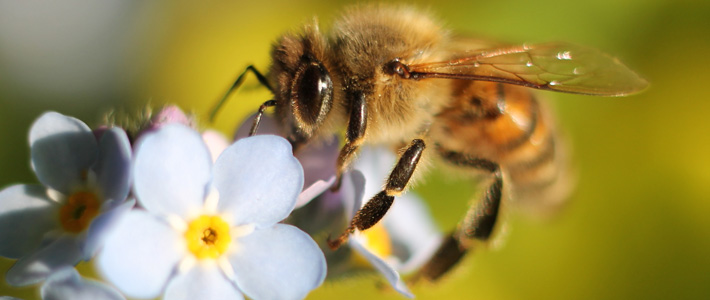
Serious unintended effects in bees from GM dsRNA
Article via: GM Watch

A new study shows major unexpected effects in bees from dietary GM dsRNA.
Early this year, a peer-reviewed study was published by Prof Jack Heinemann and colleagues suggesting that government GMO regulators are failing to consider important risks of new kinds of GM plants and co-technologies.
http://www.sciencedirect.com/science/article/pii/S0160412013000494
http://www.gmwatch.org/index.php/news/rss/14920
http://www.gmwatch.org/index.php/news/archive/2013/14699
http://www.gmwatch.org/index.php/news/archive/2013/14694
These new-type GM plants and products are designed to make a form of genetic information called double-stranded RNA (dsRNA). While most existing GM plants are designed to make new proteins, the new GM plants and products make dsRNA in order to alter the way genes are expressed.
This process of gene expression alteration is called RNAi or RNA interference, or post-transcriptional gene silencing.
Research has shown that dsRNAs can transfer from plants to humans and other animals through food.
http://www.ncbi.nlm.nih.gov/pubmed/21931358
The Australia/New Zealand GMO regulator FSANZ dismissed Heinemann and colleagues' study, using spurious reassurances about dsRNA risks.
http://www.gmwatch.org/index.php/news/rss/14920
The Science Media Centre of New Zealand joined in the chorus to silence concerns raised by the study.
http://www.gmwatch.org/index.php/news/archive/2013/14703
Now a new study in honey bees shows that Heinemann and colleagues were right to warn about the unintended effects of dsRNA-type products.
The new study revealed that the expression of nearly 1,400 of the bees' genes was altered in response to a certain type of dsRNA administered in their food - representing around 10% of known honey bee genes.
http://www.mdpi.com/2075-4450/4/1/90/pdf
Interestingly, this particular dsRNA has been used as a control dsRNA in honey bee experiments, since its gene sequence does not exist in honey bees and thus it was not expected to trigger RNAi responses in the bees.
http://www.mdpi.com/2075-4450/4/1/90/pdf
It seems this was yet another assumption about GMO safety that has been proven wrong by further scientific research.
The authors of the new study noted: "Expression changes appear to be the result of both direct off-target effects and indirect downstream secondary effects."
Do these effects matter? Apparently, yes. The authors explain: "In general, the affected genes are involved in important developmental and metabolic processes associated with RNA processing and transport, hormone metabolism, immunity, response to external stimulus and to stress."
Another surprise was that only a small number (less than 11) of matches between the dsRNA and non-target gene were enough to cause off-target effect in the bees.
Let's hope the risk-deniers in regulatory agencies read the study and take note.
Serious unintended effects in bees from GM dsRNA

A new study shows major unexpected effects in bees from dietary GM dsRNA.
Early this year, a peer-reviewed study was published by Prof Jack Heinemann and colleagues suggesting that government GMO regulators are failing to consider important risks of new kinds of GM plants and co-technologies.
http://www.sciencedirect.com/science/article/pii/S0160412013000494
http://www.gmwatch.org/index.php/news/rss/14920
http://www.gmwatch.org/index.php/news/archive/2013/14699
http://www.gmwatch.org/index.php/news/archive/2013/14694
These new-type GM plants and products are designed to make a form of genetic information called double-stranded RNA (dsRNA). While most existing GM plants are designed to make new proteins, the new GM plants and products make dsRNA in order to alter the way genes are expressed.
This process of gene expression alteration is called RNAi or RNA interference, or post-transcriptional gene silencing.
Research has shown that dsRNAs can transfer from plants to humans and other animals through food.
http://www.ncbi.nlm.nih.gov/pubmed/21931358
The Australia/New Zealand GMO regulator FSANZ dismissed Heinemann and colleagues' study, using spurious reassurances about dsRNA risks.
http://www.gmwatch.org/index.php/news/rss/14920
The Science Media Centre of New Zealand joined in the chorus to silence concerns raised by the study.
http://www.gmwatch.org/index.php/news/archive/2013/14703
Now a new study in honey bees shows that Heinemann and colleagues were right to warn about the unintended effects of dsRNA-type products.
The new study revealed that the expression of nearly 1,400 of the bees' genes was altered in response to a certain type of dsRNA administered in their food - representing around 10% of known honey bee genes.
http://www.mdpi.com/2075-4450/4/1/90/pdf
Interestingly, this particular dsRNA has been used as a control dsRNA in honey bee experiments, since its gene sequence does not exist in honey bees and thus it was not expected to trigger RNAi responses in the bees.
http://www.mdpi.com/2075-4450/4/1/90/pdf
It seems this was yet another assumption about GMO safety that has been proven wrong by further scientific research.
The authors of the new study noted: "Expression changes appear to be the result of both direct off-target effects and indirect downstream secondary effects."
Do these effects matter? Apparently, yes. The authors explain: "In general, the affected genes are involved in important developmental and metabolic processes associated with RNA processing and transport, hormone metabolism, immunity, response to external stimulus and to stress."
Another surprise was that only a small number (less than 11) of matches between the dsRNA and non-target gene were enough to cause off-target effect in the bees.
Let's hope the risk-deniers in regulatory agencies read the study and take note.
Labels:
Bees,
Colony Collapse,
DNA,
Extinction,
Genetic Modification,
GMO,
Health,
Honeybees,
Monsanto,
New World Order,
Order of Death,
Plants,
Population Control,
Unintended Consequences
Sunday, September 15, 2013
Young Living Oil Review: DiGize
This is my first Youtube video.... I'm thinking of doing more reviews of the Young Living oils as I try them... hopefully, I will be a little less nervous each time.
Subscribe to:
Posts (Atom)